


| Number | AMHAM: OBJECT.199.4 |
|---|---|
| Date | (1320 - 1400) |
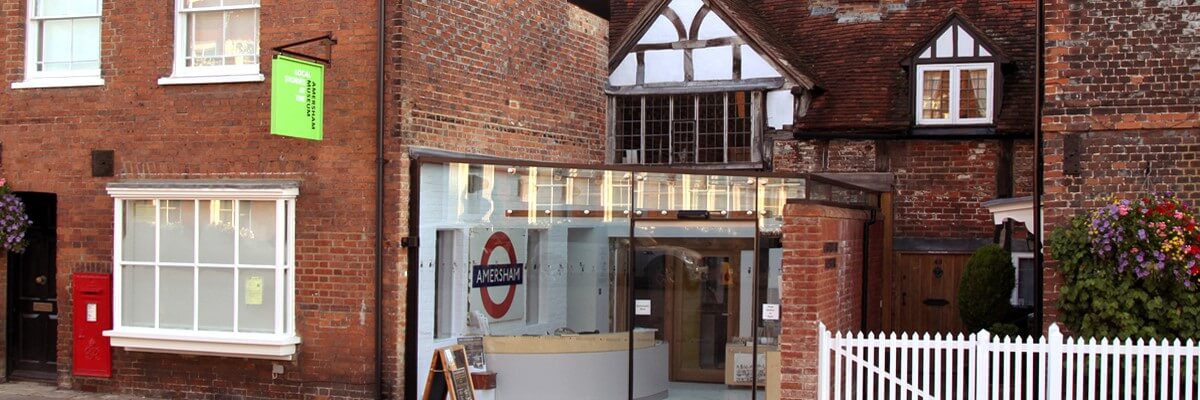
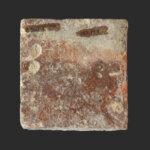
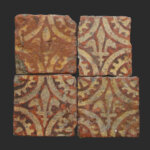
| About this object | A glazed and patterned floor tile, of medieval origin, probably from Penn tileries. This tile was found in the ground about 3ft under an old washhouse floor at Morland House, on Whielden Street, in Amersham. The house was built in the late 17th century. The discovery of this and other tiles indicate that there was an earlier building on this site of some importance. The tile would have been hand moulded by craftsmen working in little village tileries, in this case, most likely in Penn during the fourteenth century (at which time there would have been as many as 15 kilns). Production was key as tiled floors were used extensively in important buildings, both ecclesiastical and secular, as a replacement for earth floors. The “liberty to dig clay and sand”, a traditional “right of common” at Penn and Tylers Green, meant the tile-makers could access the raw material for tile production. Water was available from the ponds and wells nearby and local coppiced wood to fire the kilns could be bought very cheaply. The Penn tilers’ enterprise pioneered new techniques. Penn tileries created 173 recorded patterns. |
| Made By | Penn tileries |
| Made In | Penn |
| Physical Description | A small red clay tile, slightly damaged edges and top right hand corner, glazed with a pattern of a central fleur-de-lis between four quadrants each enclosing an embattled quadrant and a quarter octofoil. This is difficult to see on the damaged corners of the tile. The glazing is mottled (with dirt) and a dull yellow colour with slight sheen on the glaze and is similar to other medieval tiles found in this area. The tile is 10.5cm square and 2.5cm in thickness. |
| Find Out More | Penn Tiles – Buckinghamshire Culture |