
Amersham History
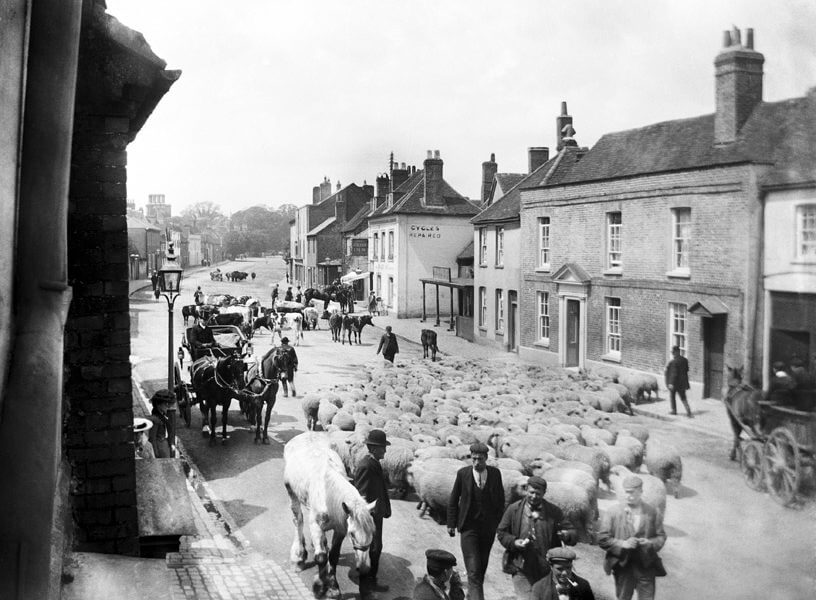
“A right pretty market [town] of one street well built with timber”.
This is a description of Amersham written around 1540 by the Tudor historian, John Leland which still applies to the High Street today. Thanks to the arrival of the Metropolitan Railway in 1892, however, the town has two distinct areas, Amersham-on-the-Hill, and Old Amersham.
Unlike his father who was totally opposed to the railway, landowner Thomas Tyrwhitt Drake agreed to sell the railway company some of his land at Hyrons Farm on a ridge above the town, as he did not want to see the line from his manor at Shardeloes.
With most recent developments taking place at the top of the hill, Old Amersham has retained its medieval, wide high street. It has also retained its most important buildings, including the landmark Grade II* Listed Market Hall, built by Sir William Drake in 1682 and Gilbert Scott’s 1839 Amersham Union Workhouse.
Old Amersham, possibly more than any other small town in England, preserves in its streets the same general appearance that it had in the 17th and 18th centuries. One major change was made in 1939 when a row of cottages, known as the Alley, which used to make up the east side of Market Square, was demolished as part of the government’s slum clearance programme. The memorial gardens were created to the north of the site when the town’s War Memorial was moved here from St Mary’s churchyard.
In 1929 the Old Town was scandalised when young architect, Amyas Connell, completed High & Over, (now Grade II* Listed) for Professor Bernard Ashmole, considered to be the first house in Britain in the International Moderne Style pioneered by Le Corbusier.
Featured in the 1973 John Betjeman documentary Metro-Land, Amersham-on-the-Hill has its own character. It features some fine Arts & Crafts buildings, mainly by architect John Harold Kennard, but Initial development was slow because of the lack of a mains water supply. This speeded up after the completion of the water tower at Coleshill in 1915. 1930s architecture such as J Sainsbury’s Chiltern Parade on Sycamore Road give this area a distinctive Metroland feel. This was a term coined by the Metropolitan Railway’s marketing department to encourage workers to move out of London to one of the company’s new housing developments along the railway line. Tragically in 1961 Amersham-on-the-Hill demolished its 700 seat Art Deco Regent Cinema and replaced it with a supermarket! Today the two centres combine to make one vibrant market town with a rich and varied history.
Our Scrapbook
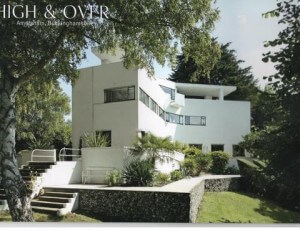
BUILDINGS – of all sorts: houses modern and old, churches, pubs and shops
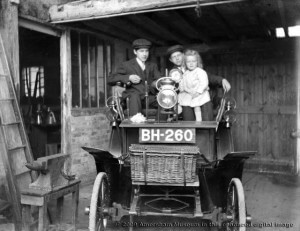
PEOPLE – some famous, some not, all with interesting stories
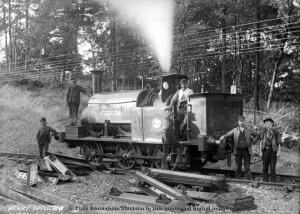
OTHER TOPICS – everything else: wartime, sport & entertaiment, local industries, transport
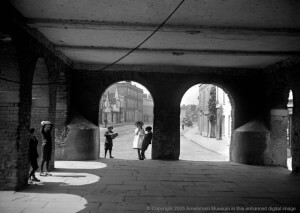
VIRTUAL EXHIBITION of George Ward’s photos of Amersham from 1880 to 1930
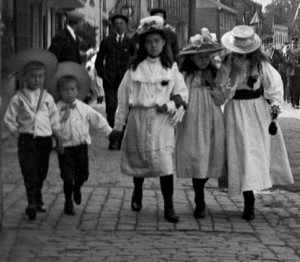
PODCASTS – Click on the image to hear our “Local Stories” podcasts
Helpful tip: to find a particular house, person or street, try using the SEARCH box in the left hand column of every page (or below on mobile phones).
Although we call it the Amersham History section of this website, it does not pretend to provide a full history of the town; for that we recommend Julian Hunt’s excellent book A History of Amersham. This section is more like a well-indexed, searchable and ever-expanding giant scrap-book, telling the stories of people who have lived in the town, often in their own words. Click here to find out how to carry out personal research into your house or family.
We are always adding more articles, photos and information to the website as the result of research and enquiries. Please contact us if you have corrections or additions.
Plan Your Visit
Opening hours:
Wednesday to Sunday 11.30am to 4pm. Also Bank Holiday Mondays.
49 High Street
Old Amersham
Buckinghamshire
HP7 0DP
Contact Us
“Enjoyed our visit to this wonderful interactive museum where you are positively encouraged to touch things!”
“Visited Amersham museum yesterday – lovely place, provides many details on the history of the place. Plenty of cute cafes, pubs and shops around also… not difficult to find free parking nearby. ”
“A well-run, informative and interesting small museum on the main street. It’s mostly volunteer-run and they do a great job in keeping it and making you feel welcome…Check out the herb garden too.”
“Enjoyable film and television location guided walk around Amersham hosted by Amersham Museum – here are the Sun Houses on Highover Park and further up the hill is High & Over.”
Staying In Touch
Subscribe to our newsletter for all the latest news & events