
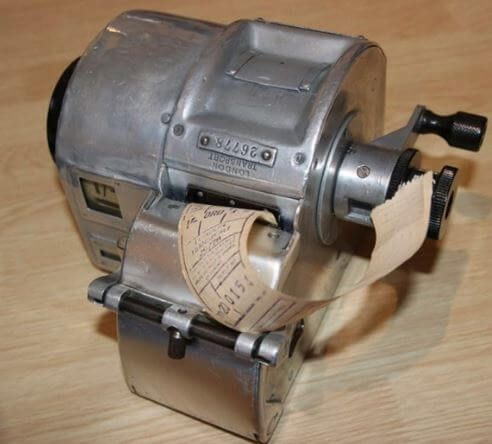
Anyone traveller on any of London Transport’s buses in the latter half of the 20th century will be familiar with this item in the museum’s collection. Named after its designer, George Gibson, a London Transport employee, its invention streamlined ticketing on the buses, saving time and helping to reduce fraud.
Prior to its introduction, pre-printed tickets were used, the bus conductor would need to carry enough to cover demand and all the different fares. I was time consuming, they would need to find the right one for each sale and then on issue, the tickets were punched, both to cancel them and to record the number of sales. The resulting punched “chads” were collected in the punch and later counted to ensure they matched the revenue, a time consuming process but necessary to prevent fraud. The distinctive ring made by the punches, demonstrated to the passenger, that a ticket had been issued and not a used one, being resold fraudulently.
With the Gibson machine, tickets were printed onto plain paper rolls on demand giving several advantages:
- No need for the conductor to carry numerous tickets
- It allowed for more fare variations such as Child, Workers special, School fare etc.
- Sales of each ticket type and value were recorded automatically for checking against revenue
- Removed the theft risk associated with pre-printed tickets and the risk of resale of used tickets
The Gibson machine, like the Routemaster bus are synonymous with London, the machines distinctive noise as the ticket was issued will be familiar to many. Such was its iconic status that Triang toys produced a working replica, a much loved childhood toy of this articles author. The machines remained in use on London’s buses until the 1990’s giving nearly 50 years of service, now they are collectable by transport enthusiasts.