The Brown Family, Cinderella’s coach and a toy theatre collection
By Alison Bailey Dec 2025
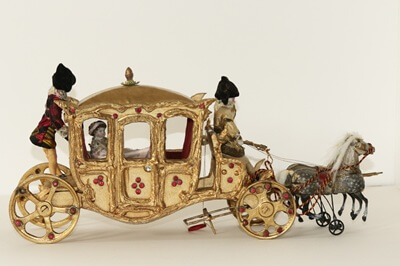
One of the collection objects that can be viewed online is this miniature golden coach, used in a production of Cinderella. The 16cm high carriage is encrusted with several small red jewels and led by two grey dappled horses. It is part of a model theatre collection held by the museum which includes two full sets of dolls, scripts, props, staging and the wooden theatre itself.
Model theatre
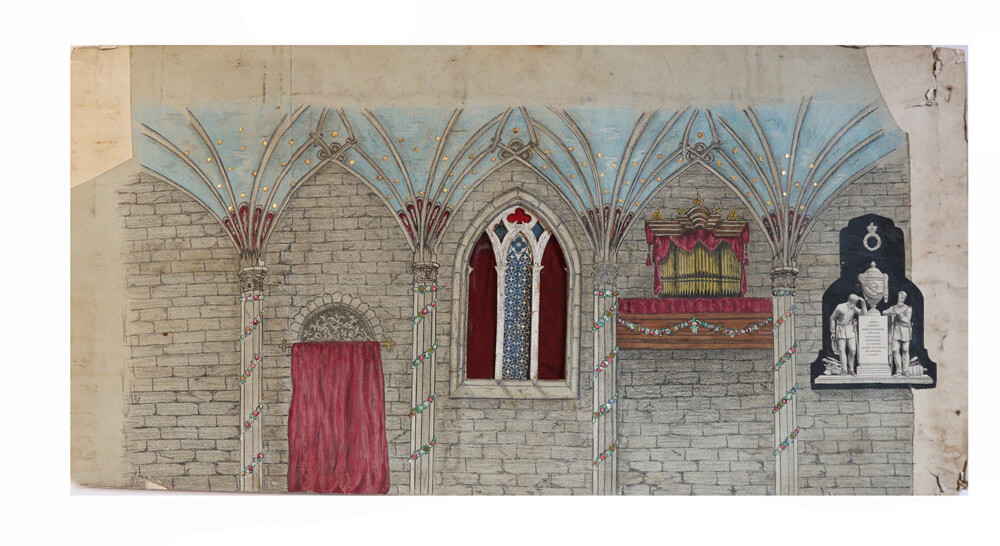
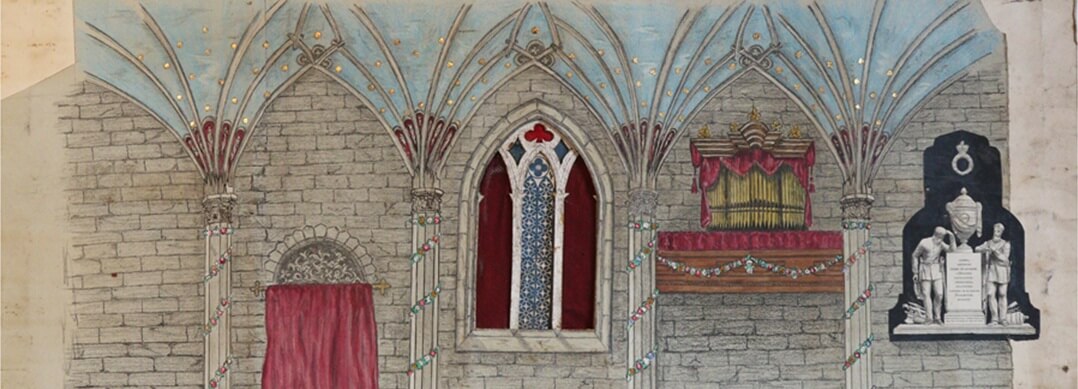
Model theatre (also known as toy theatre) is a form of miniature theatre dating back to the early 1800s in Europe. Kits printed on paperboard sheets were sold at the concession stand of a theatre to be assembled at home and performed for family members and guests. Publishers sent artists to the playhouses to record the scenery and costumes of the greatest successes of the day and more than 300 plays in early-Victorian London were issued as model theatres. Pollocks Toy Shop in Covent Garden, which still sells such theatres, was first established in Hoxton in 1856. It also became a popular pastime for theatre lovers to create their own model theatre with hand-painted stages, scenery and props. Figures were attached to small sticks, wires, or strings to allow them to move about the set.
Malcolm Riach’s model theatre

The model theatre in Amersham Museum’s collection was first created by Malcolm Riach in Perthshire in the 1830s. Malcolm Stewart Riach who was born in 1821, the son of Scottish Major William Alexander Riach of the 79th Regiment Cameron Highlanders. His childhood was spent moving with the army between Ireland (where he was born), Scotland, England and Canada. Early performances were for family and friends, and to raise funds for various Perthshire charities such as the local hospital and ‘The Indigenous Old Men’s Society’. Riach’s first model theatre used flat cardboard figures, but he later acquired small dolls four to six inches in height. He created a procession board for groups of characters and a mechanical device, using umbrella spokes, twine, circular pill boxes, hat pins and a pulley, to move his figures around the stage and to rotate them 360 degrees.
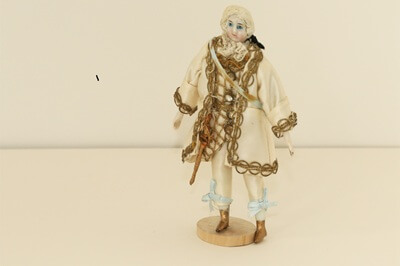
Riach became a successful businessman and moved to Wimbledon with his wife, Elizabeth and their five children. He continued with his hobby and put on more ambitious productions, involving the whole family. His production of Cinderella required almost 100 dolls. Grooves in the floor enabled the pumpkin and attendants to appear and clouds allowed their transformation into the coach with horses. To effect faster scene changes the entire stage behind the proscenium (the frame that separates the stage from the audience) was changed when the curtain was lowered.
The Brown family of Amersham
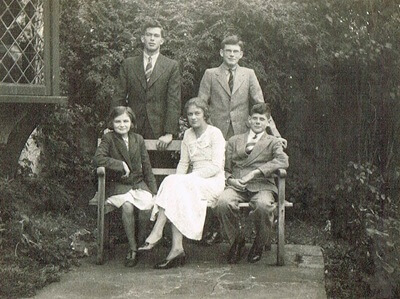
In 1878, Riach’s daughter, Alice married Oswald Timothy Brown, a civil engineer from Hampstead. Oswald was particularly enthusiastic about the model theatre and helped his father-in-law make various improvements in the 1890s, including adding a new proscenium. Malcolm Riach died in 1899, and bequeathed the theatre to his grandson, Oswald Montague Brown who shared his father and grandfather’s love of the theatre.
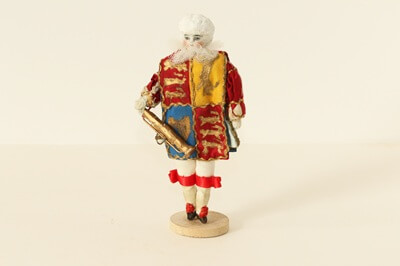
After school, Oswald became a cadet at the Royal Military Academy in Woolwich before qualifying as a chartered accountant. In 1909 he married Audrey Jeanette Watson, daughter of John Adam Watson, a medical man of Wimbledon. Towards the end of WWI Oswald moved his wife, three young children and the theatre to Amersham Common where they lived at Litle Croft Chestnut Lane. Two more children were born there.
The refurbished theatre

Oswald made further modifications and improvements to the theatre in the 1920s. He introduced electrical lighting and bought a large number of new dolls from a German manufacturer at two shillings a dozen. The whole family continued to be involved. His widowed mother remained in Wimbledon but her companion, Alice Herbert, and her nurse, Jessie Lewis, created new costumes for the dolls. New scenery was painted and a cyclorama, a curved backdrop, was introduced to create the illusion of infinite space.
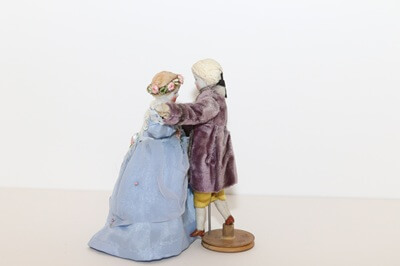
Oswald joined the British Puppet & Model Theatre Guild, established in April 1925 and exhibited at some of their early exhibitions. Productions became more ambitious requiring at least three additional people for sound effects, music and speaking parts. A new production, Ali Baba was created in 1927, with the script written by the Brown children. Performances were put on for family and friends, particularly at Christmas or as fundraisers for local charities.
The National Trust for Scotland
Oswald died in 1947, just months after the tragic loss of his youngest son, Captain John Reginald Ogilvie Brown of the Gordon Highlanders. John and his wife Zena (née Miles) lived at Sylverton, 57 Bois Lane after their marriage in India in 1943. He died at the age of 27 of cerebral malaria whilst on active service in Accra, Ghana and is buried there in the Christiansborg War Cemetery. In 1944, another son, Sgt Robert Stafford “Robin” Brown, also of the Gordon Highlanders, had died in Holland, age 28, during the liberation of the Netherlands. The eldest daughter Daphne married Sydney Loosley in Amersham in 1945 and later moved Gloucestershire.
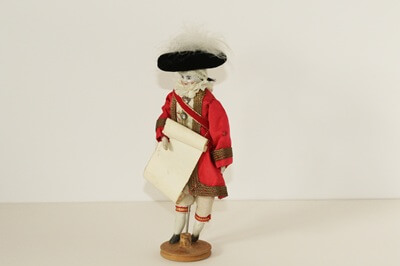
After Oswald’s death, the model theatre was inherited by the eldest son, Timothy, who moved to Stirlingshire in Scotland after his marriage in 1952 to Margot Sloan of Helensburgh. Concerned that the theatre collection was deteriorating stored in his “rather damp workshop, Tim lent the theatre to the National Trust for Scotland in 1988. After re-wiring the theatre and restoring 204 dolls for Cinderella and Ali Baba, the Trust displayed it in the House of Dun, four miles west of Montrose for some years.
Tim died in 2004 and bequeathed the theatre to his daughter, Esther. Some years later she donated it to Amersham Museum. Part of the theatre collection, including Cinderella’s coach is on permanent display at the museum but can also be viewed at amershammuseum.org. All photos courtesy of Amersham Museum.