By Neil Rees
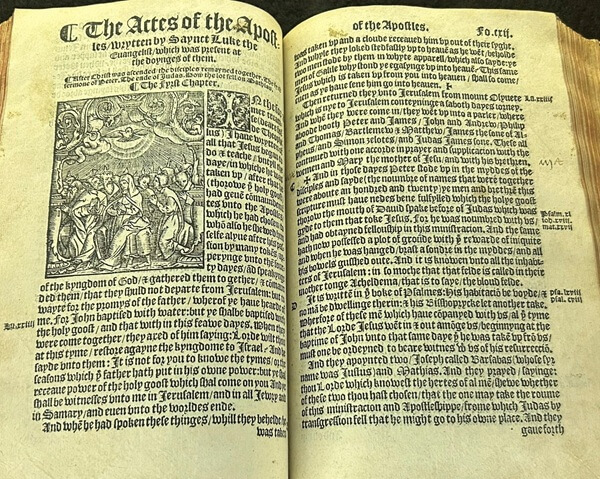
Buckinghamshire has many connections to translators of the Bible. This is the story…
John Wycliffe
An advocate for translating the Bible into English was John Wycliffe. In 1368, he became rector at Ludgershall in north Bucks. At that time, the Church across western Europe operated through Latin, which few knew well. Local tradition claims that Wycliffe began translating the Bible in a room above Ludgershall parish church porch. In 1374, Wycliffe moved to Lutterworth in Leicestershire. Wycliffe and his associates completed translating the whole Bible into English from Latin about 1382. He led a spiritual renewal movement known as the Lollards, which continued after he died in 1384.
Wycliffe Bible Translators
Wycliffe’s name was used by a modern Bible translation agency called Wycliffe Bible Translators. From 1971 until 2013 they were based at Horsleys Green near West Wycombe in Bucks.
Lollards
Lollards believed that being a Christian was not just a cultural identity or something you did on Sundays but was a personal faith. For them one of the key issues was that they should be able to use English and not Latin. For Lollards it was simply a ridiculous idea that you should have to learn and use a foreign language for worship, prayer and to read holy Scriptures. They read Wycliffe’s English Bible, and believed that the teachings of the Bible should take precedence over the teachings of the Church, when they were in conflict. Their beliefs would be considered fairly mainstream evangelical today, but in those days, they were heretical, because they challenged many of the traditions of the Church.
Amersham Martyrs
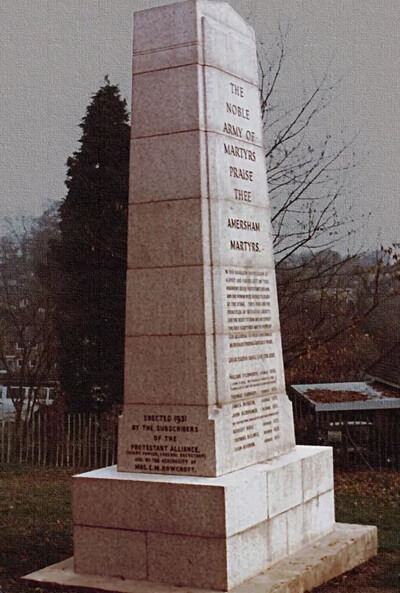
The Chilterns were a stronghold for Lollards. In the early 1500s there were many Lollards from south Bucks who were executed for their beliefs. There is a monument to local Lollard martyrs which stands up Amersham Hill not far from the station, which was erected in 1931.

William Tyndale
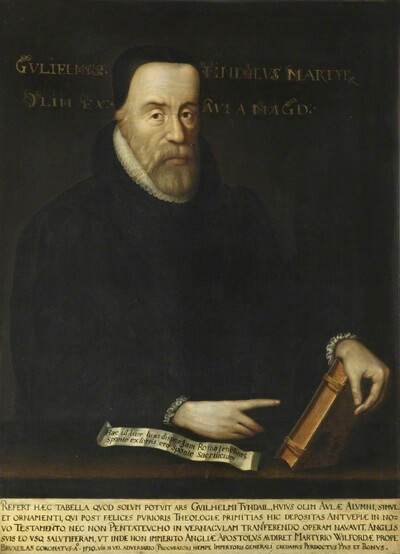
Another area of Lollardy was around Bristol and south Gloucestershire. It was here that William Tyndale was born in the early 1490s. He went to Oxford, and learnt Latin and Greek, and was ordained as a priest. Inspired by the Lollards and the Reformation in mainland Europe, In the 1520s Tyndale started to translate the New Testament into English. He used a version of the Greek New Testament which were now being produced on printing presses in mainland Europe. He went to see the Bishop of London to get permission to translated it but was refused.
With his purpose exposed, and potentially putting him in danger, Tyndale fled to mainland Europe, likely to Cologne and then Worms. It was in Worms 500 years ago in 1526, that he managed to get the whole of the New Testament published in English. These were smuggled into England where they found a huge demand. Tyndale’s New Testament was more accurate and easier to understand that Wycliffe’s archaic translation. Its great advantage was that it was printed, and copies were not cheap, but there were plenty of people wanting to buy one. Tyndale also wrote other theological works, which today would be classed as evangelical, and worked on translating the Old Testament from Hebrew.
Thomas Harding
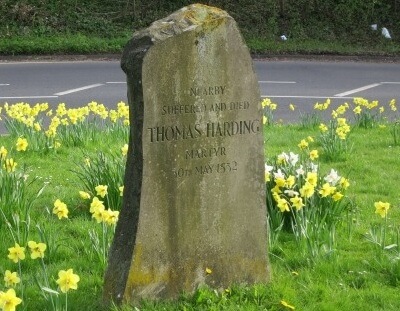
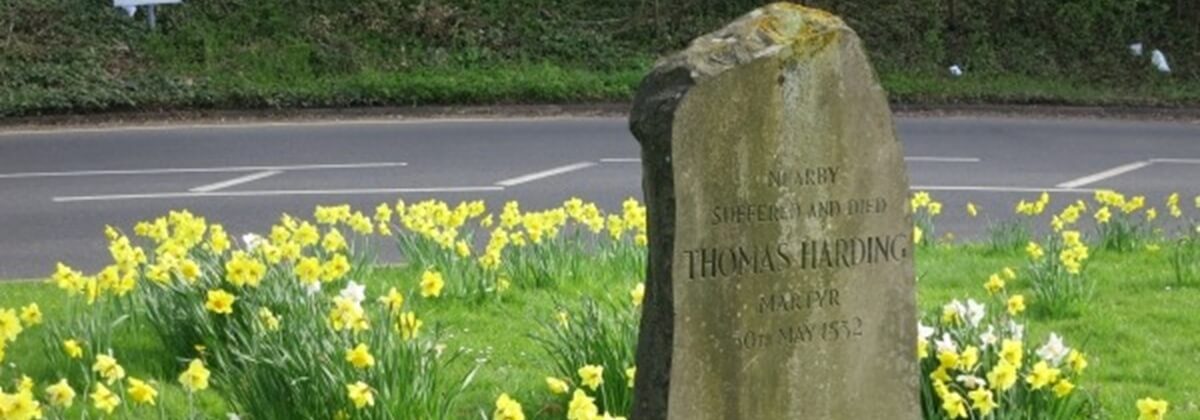
Meanwhile a local Lollard named Thomas Harding was living in Chesham. Around Easter 1532, when he was about 60, he was caught reading one of Tyndale’s books called “The Obedience of a Christian Man”. Harding and his wife Alice were arrested at their house near Dungrove Farm, where the authorities found a copy of William Tyndale’s New Testament and another book by Tyndale called “The Practice of Prelates”. These were hidden under their floorboards. Harding was interrogated and charged with reading Tyndale’s New Testament in English, and holding heretical views. Harding was burnt at the stake on May 30, 1532.
As it happens Harding was the last Lollard to be executed in England, and just two years later in 1534, Henry VIII established the Church of England. There are monuments to Harding in Chesham up White Hill near his place of execution, in St Mary’s churchyard, and the Thomas Harding Junior School, named after him.
Tyndale’s execution
Meanwhile Tyndale was living in Antwerp in what is now Belgium, trying to finish translating the Old Testament from Hebrew. However, he was betrayed in 1535 and arrested, ending his quest to translate the whole Bible into English. Tyndale was executed in autumn 1536, and his dream was completed by his friends John Rogers and Myles Coverdale.
Myles Coverdale


Meanwhile in 1538, an order was issued that an English Bible be placed in every parish church in England. There were not enough copies, so in 1539 Henry VIII authorised the printing of the Great Bible. This was edited by Myles Coverdale and incorporated Tyndale’s New Testament. Churches in Buckinghamshire and across the land, bought copies of the Great Bible, which were often chained to a lectern so they could not be stolen. In 1549, Myles Coverdale was chaplain to John Russell, Earl of Bedford who lived at Chenies Manor in Bucks. Coverdale sometimes preached locally, until 1551 when he became Bishop of Exeter.
Richard Davies
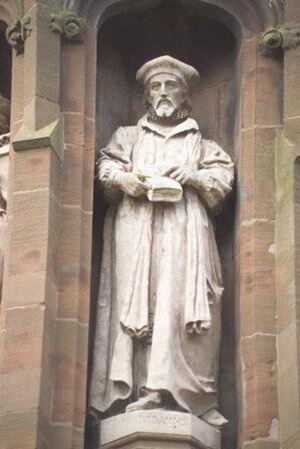
Another Bible translator with local connections was a Welshman called Richard Davies. Davies was born about 1505 in north Wales and educated at Oxford. He married Dorothy Woodford of Brightwell Manor near Burnham in south Bucks. In 1549 he became rector at Maids Moreton in north Bucks, and then in 1550 at Burnham. In 1560, he was made bishop in Wales, where he assisted William Salesbury in translating the New Testament into Welsh, published in 1567. Then in 1568 he was also onto the committee to revise the Great Bible, to create the Bishops’ Bible, which was later revised to become the famous Authorized or King James Version.
Quincentennial
Churches across Buckinghamshire, and all of England will be marking the 500th anniversary of Tyndale’s landmark translation through 2026. For more information contact the Tyndale Society.