
By Alison Bailey July 2026
To commemorate the 250-year anniversary of the American Declaration of Independence on 4 July 2026 this is the story of one of Amersham’s surprising links to America.
During the first two years of WWII, the USA pursued a policy of neutrality. On 7 December 1941, this all changed when Japan launched a devastating attack on America’s Pacific Fleet at Pearl Harbour and forced the USA into the war. In February 1942, General Eaker of the USA Air Force and his staff officers arrived in London to establish US Bomber Command which they opened two months later in the grounds of Wycombe Abbey School.
However, Amersham had established an earlier wartime connection with America. In 1941, Californian subscribers to the Save the Children Federation of America provided the money to build a nursery in Amersham as a way of aiding the British war effort without becoming involved militarily.
Essential War Work
In March 1941, single women aged 20-30 were called up to fill the jobs of men who were away fighting. However married women also wanted to support the war effort and there were plenty of opportunities locally. Amersham Prints, a fabric manufacturer in Old Amersham, made barrage balloons, dinghies and air sea rescue equipment. Radios were manufactured in the London Road, aircraft parts were manufactured at several factories in Chesham and radiochemical production had started at Chilcote House. Women were also needed as land girls, as forestry workers, on the buses, as catering staff and to work in Military Intelligence. Extra nurses were recruited as Shardeloes had become a maternity hospital, and Amersham Hospital had become an Emergency Services Hospital. However, the working week could be very long. Green Line bus crews for example, were expected to work a 48-hour week. Married women could only work if they could find adequate childcare and in the 1940s there was little provision of nursery places in Amersham and the surrounding area.
The Nursery

The cost of a new nursery, £1,100 was contributed by the Save the Children Federation of California. Architect Judith Ledeboer, then on war service for the Ministry of Health, designed the building, and a site was chosen on farmland adjoining Mitchell Walk, which at that time was an unmade road with only one house. Despite the dangers of travelling across the Atlantic during the war, the President of the Californian Save the Children Federation, Henry J Allen, of Wichita, Kansas, travelled to Amersham to ‘cut the first turf’. The chairman of Amersham Rural District Council, Alfred Woodley organised the ceremony and the two became firm friends.
“I am glad to be here on this useful occasion” Henry was quoted in the Bucks Examiner, “if you could see America today you would be satisfied with the progress we are making in the war effort … those who ask, ‘when are you coming into the war?’ do not realise that we are in it up to the neck and cannot get out of it.”
On 9 February 1942 the nursery, then called Handy Place, opened its doors for the first time with places for forty children aged two to five, although occasionally babies as young as 18 months were admitted if their mothers’ work was essential to the war.

The Bucks Examiner of 13 February 1942 described Handy Place as follows: “the nursery consists of play and rest-rooms, cloak-rooms and a fully equipped kitchen. Light and airy, but with an efficient heating system, it has a fine southerly aspect, and is, in every way and ideal space for its purpose. The outstanding features, which strike the visitor, are the spotless cleanliness of everything, its bright and cheerful atmosphere, and the splendid equipment provided for the little folks’ comfort”. Small mattress beds were covered with a bright patchwork quilt which were gifts from the Canadian Red Cross.
The nursery was one of a number of nurseries founded by the Save the Children Fund in the UK, including the Beech Green Nursery School in Aylesbury which opened in 1942.
Henry regularly sent money to support the Amersham nursery and organised collections of toys and equipment amongst his friends and neighbours at Christmas. He maintained a regular correspondence with the head of the nursery, Miss Josephine Balls and was delighted to receive news and photographs of the nursery’s progress. He wrote in January 1945: “It seems a far cry from the little spadeful of dirt on the side of a hill at Amersham, to the fine thing that has been developed under your care”.
Henry J Allen (1868-1950)

Henry Justin Allen was born on 11 September 1868 in Pennsylvania, one of seven children. Two years later the family moved to a farm in Kansas. Henry became a barber when he left school and saved enough money to attend Baker University and became interested in journalism. He developed a successful career and great wealth in newspapers. He owned and edited the Wichita Beacon for twenty years and built the first ten-storey office block in the state of Kansas.
Henry was a follower of Theodore Roosevelt and stood unsuccessfully as the Progressive Party candidate for Governor in 1914. Two years later he returned to the Republican party and was Governor of Kansas for two terms from 1918 to 1923. He learned of his landslide victory in the 1918 election while in France working for the American Red Cross. He did not seek a third term of office and returned to the Beacon. In 1929 Henry Allen was appointed to the United States Senate where he served for a year. He continued to campaign for Republican presidential candidates for many years, campaigned for women’s rights (he oversaw the Kansas women’s suffrage amendment) and opposed the Ku Klux Klan.

In 1893 Henry Allen married Elsie Nuzman. Always forward looking, Henry commissioned the pioneering architect Frank Lloyd Wright to design a house in Wichita where they lived until 1947. The couple had two sons and two daughters, but, sadly, only one daughter, Henrietta, survived childhood. Henrietta married a diplomat, Julius Holmes and had two sons and a daughter. After the war, Henrietta’s family continued the link with the UK when her husband was posted to London, and the boys went to Wellington School.
Henry Allen died on 17 January 1950, aged 81.
Miss Josephine Balls (1907-1994)

The first ‘superintendent’ of the Henry Allen Nursery was Josephine Balls, who had a certificate from the Royal Sanitary Institute for Nursery Nurses after training at the Mothercraft Training Society at Highgate.
Josephine Beatrice Balls was born in Ealing, the eldest daughter of Master Tailor Charles Maurice Balls and Gertrude Mabel Balls, née Shelley. A younger sister, Barbara was born in 1915. After completing her training, Josephine worked at Botley Park Nursery in Surrey where she specialised in child nutrition. During the 1930s she contributed regular articles on childcare to the Middlesex County Times. When war broke out, she was working as a volunteer nurse in charge of 150 evacuees under the age of 5 at Taplow Court.
Josephine had joined the Save the Children Fund soon after the charity was founded in 1919 and must have been the ideal candidate for the job as superintendent of the new nursery in Amersham. Initially she had two members of staff although this increased as the nursery grew, with one member of staff to every eight children. Whilst in Amersham, Josephine lived at Tarkwa, Plantation Road.
In 1948 she was the founding chairman of the National Association of Certified Nursery Nurses and left Amersham to take up a new role in a residential children’s home as a child therapist. During the 1950s she moved to Northumberland as the county council’s Child Care Officer and led a scheme to close residential nurseries for the under-fives and instead place them with foster families. Her experiences led to her publishing a book in 1958, Where Love is, about foster care, expressing her tremendous admiration for foster parents.
Josephine moved to Bradford-Upon-Avon and devoted her time to the Save the Children Fund after her retirement. She was awarded the MBE in 1985 for her services to the charity and died in 1994.

The modern nursery

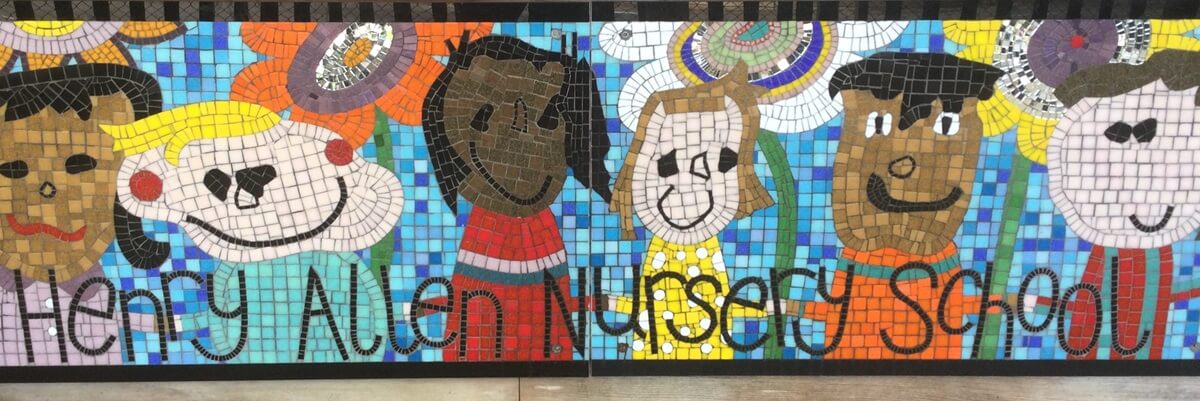
In November 2025, Henry’s great granddaughter Katherine Holmes-Chuba, a teacher in California for over 40 years, visited the Henry Allen Nursery after her brother, Gerry Holmes, discovered a reference to the school in a box of old paperwork. She was given a tour of the thriving nursery and met many children and staff. Some of the staff have worked at the nursery for over 20 years and were able to tell Katherine about the original buildings which were replaced in 2012. Following the spirit of their great grandfather, Katherine and Gerry donated £1000 to the nursery’s GoFundMe classroom appeal.
In his 1942 Christmas letter to the nursery, Henry Allen wrote: “remind the children that people are still kind. After all, that is why we are fighting this war – to keep kindness in the world”. A sentiment worth remembering today.
Sources
Katherine Holmes-Chuba
British Newspaper Archive
Henry Allen Nursery
Your Amersham
Ledeboer, Judith 1901 – 1990 | AHRnet
The American Cowboy Chronicles: Henry J. Allen — A Republican’s Fight Against The KKK