
By Alison Bailey March 2026
 This month the Museum is celebrating a special anniversary. On Saturday 23 March 1991, the Museum was officially opened at 49 High Street by Earl and Countess Howe. £163,700 had been raised by the community and it was a great credit to all those involved in the project, particularly Eric Corns and Anthony del Tufo, who had been the driving forces behind it.
The Amersham Society
The idea for a museum was first conceived 35 years earlier by the Amersham Society in 1956 when founder member Ernest Bridgstock Choat offered his collection of documents and artefacts connected with the town.
Annual exhibitions were held and then in October 1971, a survey was carried out in Sycamore Road to determine whether there was enough interest in the idea. Mrs Hancock of Chestnut Lane wanted to see a good selection of paintings and Dennis Rose, President of the Chamber of Commerce, suggested wax models of the Amersham Martyrs being burnt at the stake!
In 1980, the first Amersham Museum was officially opened by Ernest’s widow, Vera in a rented room at the Royal British Legion. With an entry fee of 10p and totally staffed by volunteers, it was open Saturdays, Sundays and Bank Holidays from 2.30 to 4.30pm.

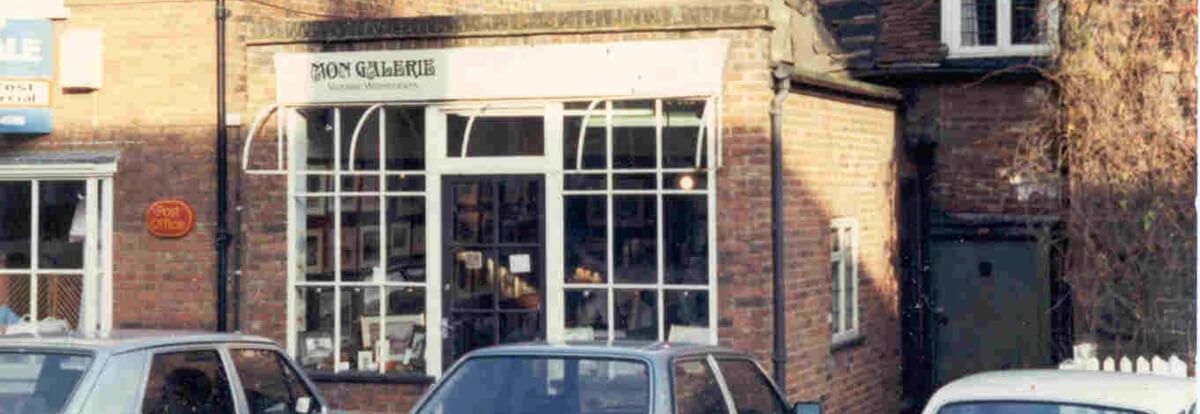
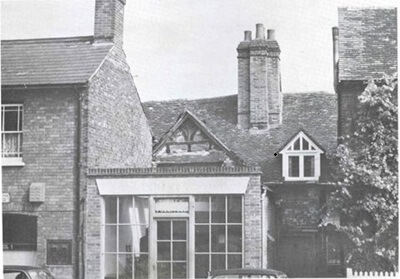
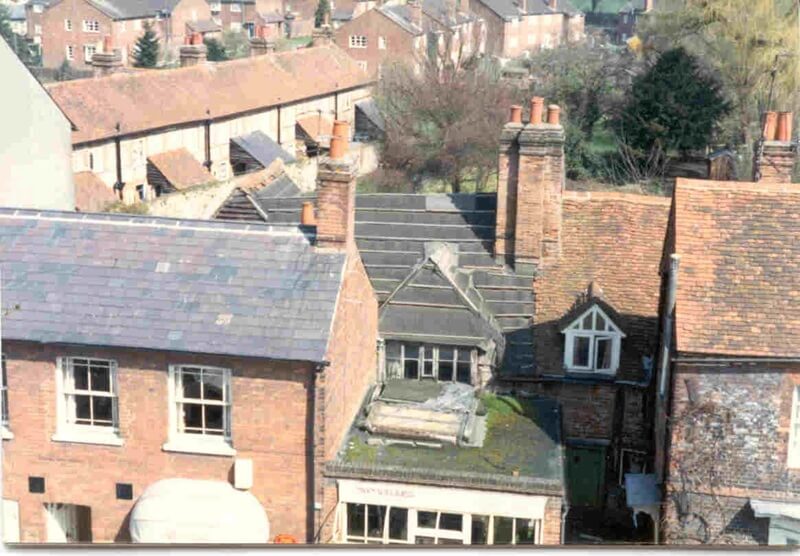
The opportunity to find a permanent home for the museum came in 1983 when 49 High Street, which had been empty for three years, and was believed to be the oldest residential property in Amersham, was offered for sale. It was advertised as “A unique 15th Century residence originally a Medieval Hall House together with a lock-up shop” which required “extensive and sympathetic restoration”.
The previous owner Ronald Frank Toovey had died in 1980 without leaving a will and his estate was eventually split between 30 heirs, found by an heir hunter. The house had been in the family since the 1850s when Henry Toovey, a furniture broker, first rented it and was part of a large hall-house built around 1480. Much of the original timber structure of the roof above the central hall, the carved arch-braced truss, and part of the solar wing could still be seen. The upper half of the original hall window also remained at the rear of the house.
Planning permission was granted in 1984 for a museum, and the dilapidated house was purchased for £64,000 with a loan which the Amersham Society agreed to repay in nine months and an appeal for £100,000 was launched for the purchase and restoration.
Fundraising

Eric Corns chaired the Appeal Committee, and its Patrons were writer Val Biro, actors Michael Denison and Dulcie Gray, Sir Ian Gilmour MP, Captain F. Tyrwhitt-Drake, Roger Parker-Jervis (then Chairman of Buckinghamshire County Council) and High Court Judge Sir Oliver Popplewell. Donations included £6,450 from the Gresham Trust, £5,000 each from Amersham International Ltd. (now GE Healthcare), Amersham Town Council, Chiltern District Council, The Pilgrim Trust and the Lankelly Foundation; £3,000 was given by the Buckinghamshire Historic Buildings Trust and many other organisations and private individuals gave generously.
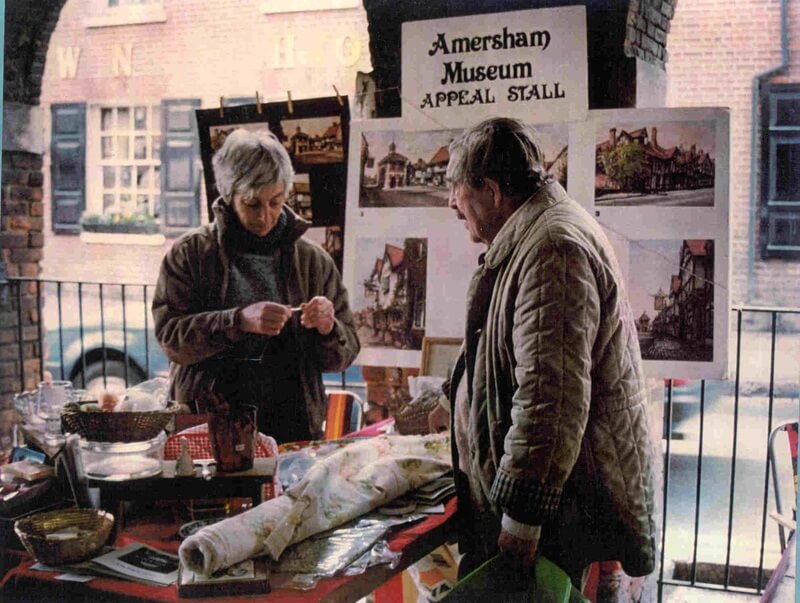
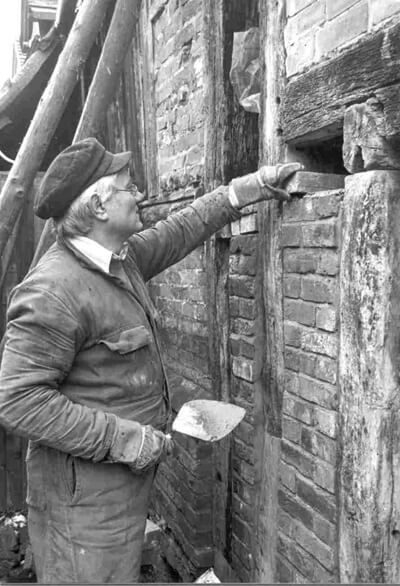
Eric Corns set up a fund-raising stall under the Market Hall, which he manned for many years; other volunteers assisted Eric from time to time, but he was there every Saturday, only allowing himself an hour or two ‘off duty’ to watch the rugby! Money was raised at many events including jumble sales, supper and garden parties, raffles, craft fairs, quizzes, a trolley-dash and an annual sponsored walk. A regular participant in the 5-mile sponsored walk was a Pyrenean mountain dog called Prince who weighed 10st, raised over £100 each year and invariably stole the show.
The Restoration
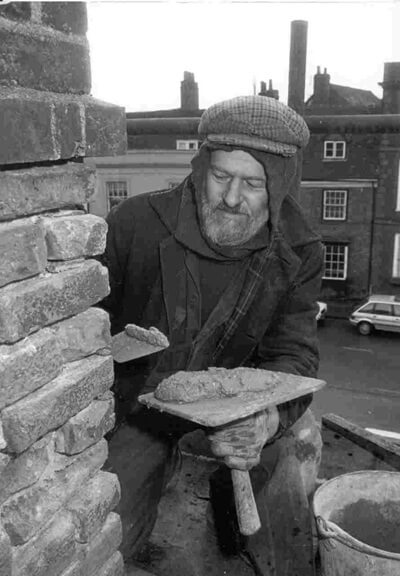
An archaeological dig was carried out and medieval rubbish pits, additional foundations and two hearths were discovered, suggesting an earlier building from the 1200s on the site. The restoration of the building began in November 1986. Civil engineer Chris Wallis (son of the celebrated inventor, Barnes Wallis), who had managed the restoration of Lacey Green Windmill, carried out major work on the timber frame and the roof. However, much of the work was carried out by volunteers, led by Jim Olney and Brian Fuller, who worked tirelessly, mainly at weekends, to complete the restoration. They were made Honorary Friends of the Museum in recognition of all they had contributed. Local firms such as A&R Building Supplies were generous in providing materials and Ercol gave fine seasoned elm to replace rotted timber flooring upstairs. A start was made on the garden in 1988 with Adventure Scouts helping to clear enough accumulated rubbish to fill more than six skips! The lock-up shop in front of the building was retained and re-let to provide much-needed income in the early years.

A new curator
In 1984 architect Monica Mullins took on the curatorial role and kept the museum room in the British Legion functional whilst 49 High Street was being restored. She did a sterling job of cataloguing the existing collection and new donations but had to call in the Army Bomb Squad when a suspiciously heavy incendiary bomb was donated. This had landed in a field at Ballinger during the war and the Museum lost an interesting exhibit when it was decided that it was potentially lethal and blown up!
A further appeal was launched in 1989 for £55,000 to equip the Museum to Monica’s design to retain sight of the structural timbers as much as possible whilst maximising the space available for displays and exhibits. Even after the Museum was opened at 49, Monica continued to work from home (luckily, relatively close by) for many years, hosting stewards’ meetings and carrying items back and forth until an office was finally created when the shop was replaced. This new building was designed by Monica’s extremely patient and supportive husband, Bill.
The Museum welcomed 3000 visitors in its first year. The following year Julia Godwin and Di Denny planted the Tudor herb garden, and the Museum was awarded the National Heritage Museum of the Year “Shoestring Award” for the museum managing to do the most with the least!
To be continued
Sources
50 years of The Amersham Society, Founders of the Amersham Museum, by Dr Michael Brooks, Christine Standring and Barbara Webber, published in 2006 to mark the 50th Anniversary of the Society
Bucks Examiner articles