
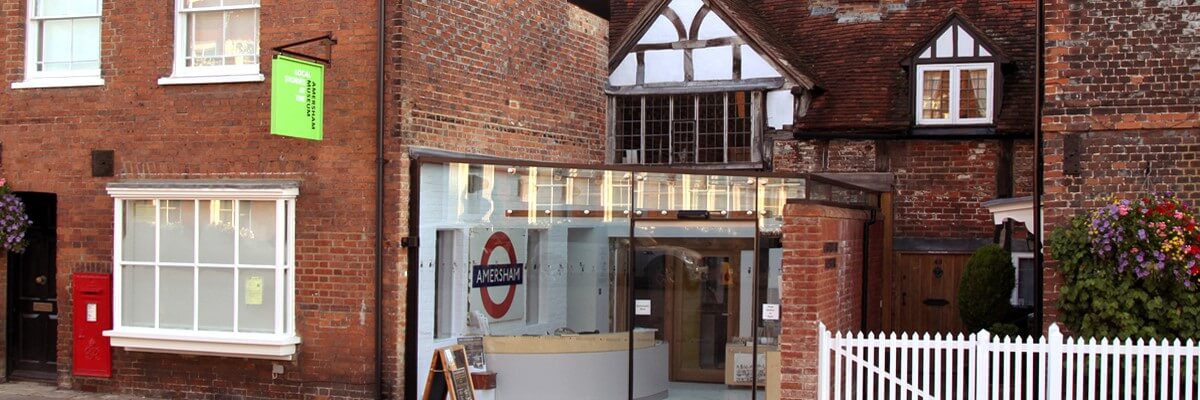
How did Amersham become Ruth Ellis’s final resting place?
By Alison Bailey

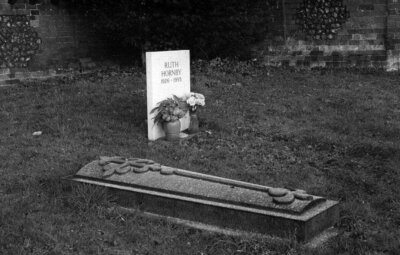
In a peaceful corner of St Mary’s Cemetery is the unmarked grave of Ruth Ellis. On 13 July 1955, she was hanged for the murder of her lover David Blakely, who lived at Penn. Over 70 years later, on 8 July 2026, King Charles III, on the advice of Justice Secretary David Lammy, granted a historic posthumous conditional pardon. This follows years of campaigning by Ruth Ellis’s family. While it cannot change the outcome of her 1955 trial, it represents official recognition that her case would almost certainly have been viewed differently under modern law.
The pardon acknowledges that Ruth Ellis was sentenced to death at a time when the criminal justice system failed to recognise the impact of domestic abuse and coercive control. Today, the courts would consider these factors which could significantly affect how a case is judged.
Ruth Ellis has been the subject of numerous books, dramas, and documentaries. Interest in her story increased in 2025, 70 years after her death, following the ITV Drama, A Cruel Love, the Ruth Ellis Story and the Apple documentary, The Real Ruth Ellis.
This is what is known about how Ruth came to be buried in Amersham, when she never lived here or had any connection with the town:
Why Amersham?
After the execution took place on 13 July 1955, Ruth Ellis was buried in Holloway Prison. In 1970 plans were made to redevelop the site and it was decided to exhume all bodies from the prison cemetery. Ruth’s sister, Muriel Jakubait, brother Granville Neilson and 26-year-old son Andre Neilson were consulted by the Home Office.

Andre, also known as Andy, had been living with his grandmother in Hemel Hempstead (where Granville also lived) but now lodged in Oxford. None of the family lived in Amersham. Andre initially asked for his mother’s remains to be reburied in the churchyard of Holy Trinity Church Penn, close to the grave of David Blakely. Permission was refused by Reverand Oscar Muspratt of Holy Trinity, out of respect for the feelings of the Blakely family. The suggestion was made that St Mary’s in Amersham would be a suitable alternative to Holy Trinity Penn as a nearby church in the same Deanery. Allan Campbell, the Rector of St Mary’s asked for a suitable site to be prepared. Cooks Funeral Service of Chesham made the arrangements with Andre (then using his father’s name, McCallum) and completed the forms for the Amersham and Coleshill Parish Councils’ Joint Burial Committee.
In the early hours of 1 April 1971, the funeral directors brought the small coffin to Amersham after Ruth’s remains had been exhumed the previous afternoon with “due care and attention to decency”. A group of reporters watched from a distance as the rector conducted a service at the grave. Andre, holding two wreaths of red and white carnations, was the only mourner present. Six months later he arranged for a simple white headstone to be placed at the grave which was inscribed Ruth Hornby 1926-1955.
The family and the grave
Ruth’s execution had a devastating impact on everyone involved in her trial but particularly on her family and her two children. Both Andre and Georgina suffered from trauma and mental health issues throughout their tragically short lives. Andre lost the vital support of his grandmother, Berta, when she tried unsuccessfully to commit suicide in 1969. She needed care for the remaining 10 years of her life and never spoke again.
In 1982 Andre died from an overdose of anti-depressants. A few weeks earlier he had smashed up his mother’s headstone whilst visiting the grave for the last time. Travers Christmas Humphreys, the lead prosecution at Ruth’s trial paid for Andre’s funeral and in accordance with his will, Andre’s ashes were interned in his mother’s grave. Once again Rev Allan Campbell officiated at the graveside.
Amersham Town Council and St Mary’s Church have since kept the grave clear of any tributes. In 1999, Ruth’s sister Muriel visited the grave from her home in Woking for the first time in in 15 years and was disappointed to see that it was unmarked. She told a local reporter that she dearly wished to erect a memorial at the grave but that the town council would not agree to this as she could not produce the deed to the grave.
According to the article of 5 May 1999 in the Amersham Advertiser: “Janet Paterson of Amersham Town Council said: “It’s the view of the council that it is in everyone’s best interests the grave is left as it is and that Ruth Ellis is better left in peace. If something was placed out there then it would generate a lot of publicity. This all happened a long time ago, but we still receive a lot of enquiries about the grave”. This was in accordance with an agreement made between the Town Clark and the Rector Tim Harper that “the wish of her son that they both rest in peace in an unmarked grave be permanently respected”.
In 2019 Tim Harper, still then the rector at St Mary’s, contributed to a Facebook debate on the location of the grave: “Ruth Ellis’ grave plot is documented by us and the Town Council, but the site is now unmarked at family request. Bits of the gravestone kept being chipped off as souvenirs. The family asked that she be allowed rest in peace, and I hope the community will continue to respect their wish”.
Albert Pierrepoint

The Sun newspaper photographed Ruth’s executioner, Albert Pierrepoint at the grave in Amersham in 1977. Pierrepoint had resigned from his role in 1956 and had kept a low profile until he published his autobiography Executioner Pierrepoint in 1974. In 1979 The Sun arranged for Muriel and Pierrepoint to visit the grave together. Pierrepoint had written that he considered Ruth Ellis to be the bravest person that he had hanged, Muriel, however, refused to shake his hand when he offered it.
The family’s fight for justice
Ruth Ellis was 28 years old, and her children were 10 and nearly 4, when she was executed for murder. The trial only lasted for three days in June 1955, and the Jury took less than 15 minutes to pronounce her guilty. She was hanged in Holloway prison just three weeks later despite numerous pleas for clemency.
Ruth admitted that she fired the four shots that killed Blakely outside the Magdala pub in Hampstead on Easter Sunday. But evidence of the horrific physical and emotional abuse that Ellis suffered was never presented in court. Nor was vital evidence concerning the role of Desmond Cussen. He was Blakely’s rival for Ruth’s attention and confessed to Ruth’s solicitor that he provided the gun, taught her how to fire it and drove Ruth to Hampstead looking for Blakely. Cussen denied this to the police and was never questioned about the gun during the trial.
Muriel devoted her life to overturning Ruth’s murder conviction. In 2003 she was devastated when Lord Justice Kay dismissed an appeal, noting it could only rule on the law as it stood in 1955 (not on whether the execution should have occurred). Georgina, who had been supporting her aunt’s campaign had died of cancer two years earlier at the age of 50. In 2007 a petition asking for reconsideration and a pardon was placed on the 10 Downing Street petitions site but expired without securing the signatures required for a government response. Muriel died in 2018.
In October 2025, law firm, Mishcon de Reya, acting for Ruth’s grandchildren applied for a posthumous conditional pardon. The firm was established by the late Lord Victor Mishcon, who secured Ruth’s divorce, but was not instructed to represent Ruth at her trial. However, following her conviction; he took on her cause, and tried to intervene to prevent her execution.
Katy Colton, Partner and Head of Politics and Law at Mishcon de Reya, who is leading on the case, said 8 July 2026:
“The granting of a posthumous conditional pardon to Ruth Ellis is a landmark moment — for her family, for the British justice system, and for every victim of domestic abuse failed by the courts.
“Today’s decision does not only right a wrong done over seventy years ago. It sends a clear signal about the aspirations of our justice system. Violence against women and girls remains a national emergency. The Government’s public acknowledgement that the abuse Ruth Ellis endured should have impacted the outcome of her case reflects an important principle: that survivors of domestic abuse today deserve a justice system that properly understands and recognises the impact of that abuse.
“Our founder, Victor Mishcon, who fought to secure a last-minute reprieve for Ruth, would be immensely proud. We congratulate Ruth’s grandchildren on their tenacity and courage in pursuing this application. It has been a privilege to stand alongside them as a firm.”
Ruth Ellis’s legacy
The national debate around Ruth’s case, had a major impact on the history of British law and order. Shortly after Ruth’s execution, the National Campaign for the Abolition of Capital Punishment Fifty years on, the debate over what replaces the death penalty continues | Louis Blom-Cooper | The Guardian was founded by Victor Gollancz and Arthur Koestler. The campaign was based on three cases in particular; Ruth’s and the cases of Timothy Evans, who was wrongfully hanged for the murder of his wife and daughter in 1950, and Derek Bentley, who was wrongfully hanged in 1953 for the murder of a policeman. The defence of diminished responsibility was introduced in England and Wales in 1957 and on 9 November 1965 the Murder (Abolition of the Death Penalty) Act was given Royal Assent and all executions suspended before capital punishment was permanently abolished in in Britain four years later.
29 December 2015 new legislation introduced the offence of controlling and coercive behaviour under section 76 of the Serious Crime Act 2015. This marked a significant milestone in the UK’s legal framework for addressing domestic abuse and this legislation was an important consideration in the granting of the conditional pardon to Ruth Ellis.
Further Reading:
Ruth Ellis – “Manifold Prejudices”
Carol Ann Lee writes in the preface to her forensically researched book, A Fine Day for a Hanging, the real Ruth Ellis story (2013 edition) that: “When Ruth stood in the dock to answer for her crime, the manifold prejudices of the period were as discernible as the fresh peroxide in her hair”.
These “manifold prejudices” were evident from the moment Ruth was arrested. The initial police statement details information about Ruth’s background and humble origins, where her parents lived and how much they earned, alongside details of David Blakely’s upper-class background. The narrative around Ruth quickly became ‘working-class woman traps upper class gentleman’. But David, for all his charm and public-school education, was no gentleman. He was repeatedly violent to Ruth, causing her to miscarry his baby just 10 days before she shot him. He lived off her earnings whilst ploughing his own money into racing cars. His drunken, jealous rages at the club led to Ruth to losing her job, her home, her security and ultimately her youngest child. Georgina was taken away by Ruth’s ex-husband and later adopted.
In the mid-50s in postwar Britain, attitudes toward women were that they should return to traditional domestic and homemaking duties and forget about the freedoms that they had enjoyed during WWII. It is evident that Ruth’s working-class origins and her position as a divorced, single mother working in London’s club scene prejudiced the outcome of her trial.
David Moffat Drummond Blakely (1929-1955)

David Blakely was only 25 when he was shot outside the Magdala public house in Hampstead on Easter day 1955. He was enjoying some success at motor racing in his beloved Emperor, a HRG Twincam sportscar Murder and mystery: whatever happened to the Emperor Special? – PostWarClassic. On 26 December 1954 he achieved 2nd place at Brands Hatch and was booked to race at the Goodwood Easter meeting on 12 April 1955, two days after his death.
David was born in Ecclesall, Sheffield, the youngest of four children. His father, John, was a Scottish doctor, and his mother, Anne, was from Ireland. His parents divorced scandalously following his father affair with a waitress, who he was later accused of murdering. His mother married again in 1941, when David was 12.
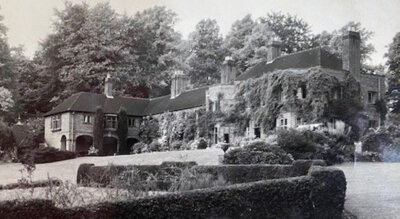
After leaving Shrewsbury school and serving in the Highland Light Infantry for his National Service, David tried several jobs before devoting all his time and money to his real passion, racing cars. David’s wealthy step-father Humphrey Wyndham Cook, who had been a racing driver in the 1930’s supported and encouraged him. David, always spoilt by his mother, had a self-contained flat in the family home at Tylers Green near Penn, a rambling country house called Old Park. The family nanny was kept on at the house to look after David. The family later moved to The Orchard on Beacon Hill, just a few yards from Slade’s Garage where David’s racing cars were kept.
5’9” tall, slim with dark hair, and famously long lashes, David was a notorious womaniser, who had affairs with many older, usually married women in his circle. He also had an affair with Carole Findlater, the wife of his close friend Anthony and became briefly engaged to Mary Dawson in November 1953, just weeks after starting a passionate affair with Ruth Ellis.
In London, David was part of heavy drinking group of racing drivers who usually frequented the Steering Wheel Club off Park Lane but also became regulars at Ruth’s club in Knightsbridge. David’s mother had a flat in Culross Street where he normally stayed in London but soon after meeting Ruth he was living with her in the flat over the club. Weekends were often spent in Penn although David never introduced Ruth to his family and always made sure his mother wasn’t already inside before taking Ruth for a drink in one of his local pubs. As all of David’s money was spent on his racing cars and socialising, he soon relied on Ruth for cash and had most of his food and drinks for free at her club.
Ruth, who had taken etiquette and elocution lessons to improve her prospects as a club manager, now took French lessons to try and fit in better with David’s upper-class friends when she met them at race meetings. She usually took along generous champagne picnics but was never welcomed by the other wives and girlfriends, particularly Carole Findlater.
David’s drink-fuelled, jealous rages at the club led to Ruth losing customers and her boss, Morris Conley, eventually lost his patience and gave Ruth the sack. This caused her life to spiral out of control once again. David was continuously unfaithful to Ruth who had started an affair with Desmond Cussen to make David jealous. The relationship with David descended into obsession and violence, caused by heavy drinking. Ruth was hospitalised in February 1955 after a savage beating which left her covered with bruises, with a black eye and a sprained ankle. In the weeks leading up to the tragedy David struck her in the stomach even though he knew she was carrying his baby and caused her to temporarily lose the hearing in her left ear, following a blow to the head. Ruth lost the baby just 10 days before she killed David.
Clare Andrea Neilson (1944-1982)
Ruth was seventeen when her first child, Andre was born. His father was a French-Canadian soldier, Clare Andrea McCallum, who was ten years older than Ruth and already married with a family back home. Ruth only learnt this later when she believed that she was engaged to McCallum. He sent money for about a year after Andre’s birth and then stopped all contact. Andre’s first years were spent with his grandmother or his aunt Muriel whilst his mother was working in London.
To support her son, Ruth tried various jobs in London including waitressing and modelling. She later had a small part in a Diana Dors film. Her options were very limited, however, having left school at 14, and she found more lucrative work as a nightclub hostess. In 1950, She married one of her clients, a dentist George Ellis in an attempt to give Andre more security and a better life. Like her father, Ellis was an alcoholic and was violent and abusive when drunk. The marriage failed soon after the birth of Andre’s half-sister Georgina in 1951.
After Ruth started managing the Little Club, she was able to offer her children a more stable home environment in the flat above the club. Sadly, this didn’t last long as David Blakely came into her life, and she later lost the job and the flat. George Ellis took Georgina away and Andre did not see her again for another 20 years. Georgina was adopted when her father died by suicide in 1958.
Andre was ten when his mother was arrested. He was never interviewed by police, although it is now believed that he was a vital witness. He would have been able to give a detailed account of his mother’s abusive relationship with David and have informed the police that he was present when Desmond showed Ruth how to fire the gun.
After his mother’s death Andre went to live with his grandparents. The judge presiding at Ruth’s trial, Sir Cecil Havers, sent money every year for his upkeep. He was enrolled as a boarder at St Michael’s College in Hitchin, a particularly harsh Catholic boarding school where pupils were regularly beaten. Andre, fragile, severely short sighted and traumatised by his mother’s death, was a persistent truant and was eventually expelled without obtaining any qualifications.
Living with his grandparents in Hemel Hempstead, and spending most of his time alone in his bedroom or travelling aimlessly on buses and train, Andre was diagnosed with depression and prescribed anti-depressants. He soon became addicted. After Berta’s attempt to take her own life in 1969, he left Hemel Hempstead and moved to a bedsit in Oxford and later London, where he died in 1982 from an overdose of Glutethimide pills. He was 37 years old.
Always desperate to understand why his mother had been executed, Andre had recorded interviews with Travers Christmas Humphreys, QC, the prosecution counsel. He told Christmas Humphreys that he had got it wrong; Ruth was not a “cold blooded murderer”. Christmas Humphreys paid for Andre’s funeral which took place on 28 June 1982 at St John’s Chapel, Woking, Surrey, followed by a cremation in Woking Crematorium. His ashes were buried in his mother’s grave at Amersham on 6 July 1982.
Sources:
Papers held by Amersham Town Council: Notice of Internment for Ruth Ellis and Clare Andre McCallum, Home Office license for Removal of Remains
Family of Ruth Ellis in fight to have her pardoned 70 years after execution | News UK | Metro News
Lee, Carol Ann, A Fine Day for a Hanging, the real Ruth Ellis story, 2011
ITV (2025), A Cruel Love the Ruth Ellis Story
Mishcon de Reya instructed to pursue pardon for Ruth Ellis
Ruth Ellis granted posthumous conditional pardon
Justice delayed is justice denied: Ruth Ellis
Apple (2025), The Real Ruth Ellis.
David Blakely 1929-1955 | History, Monuments and Memorials of Penn
BBC FOUR, (2018). The Ruth Ellis Files: A Very British Crime Story. https://www.bbc.co.uk/programmes/p060vzvf
CapitolPunishment.org, (n.d.). Ruth Ellis — the last woman to be hanged in Britain. http://www.capitalpunishmentuk.org/ruth.html
Cavendish, Richard. Ruth Ellis Executed. History Today Volume 55 Issue 7 July 2005, https://www.historytoday.com/archive/months-past/ruth-ellis-executed
Cosgrove, Ben, (2014). World War II: London in Color. Time, Life, http://time.com/3880719/world-war-ii-london-in-color-photos/
Ganatra, Shilpa, (2018). Ruth Ellis: The model who smiled at her executioner. The Irish Times. https://www.irishtimes.com/culture/art-and-design/visual-art/ruth-ellis-the-model-who-smiled-at-her-executioner-1.3690704
History Extra, (2018). Ruth Ellis and the hanging that rocked a nation. https://www.historyextra.com/period/20th-century/ruth-ellis-hanging-capital-punishment-death-penalty/
Ruth Ellis. Murder Maps. Season 4, Episode 4, November 4, 2017. Netflix, https://www.netflix.com/title/80091689
Ruth Ellis: The Last Woman Executed in Britain for Murder | by Cynthia Varady | Medium
Memo by Tim Harper, Rector 3/12/98, Ruth Ellis Details, courtesy of St Mary’s Parish Office.